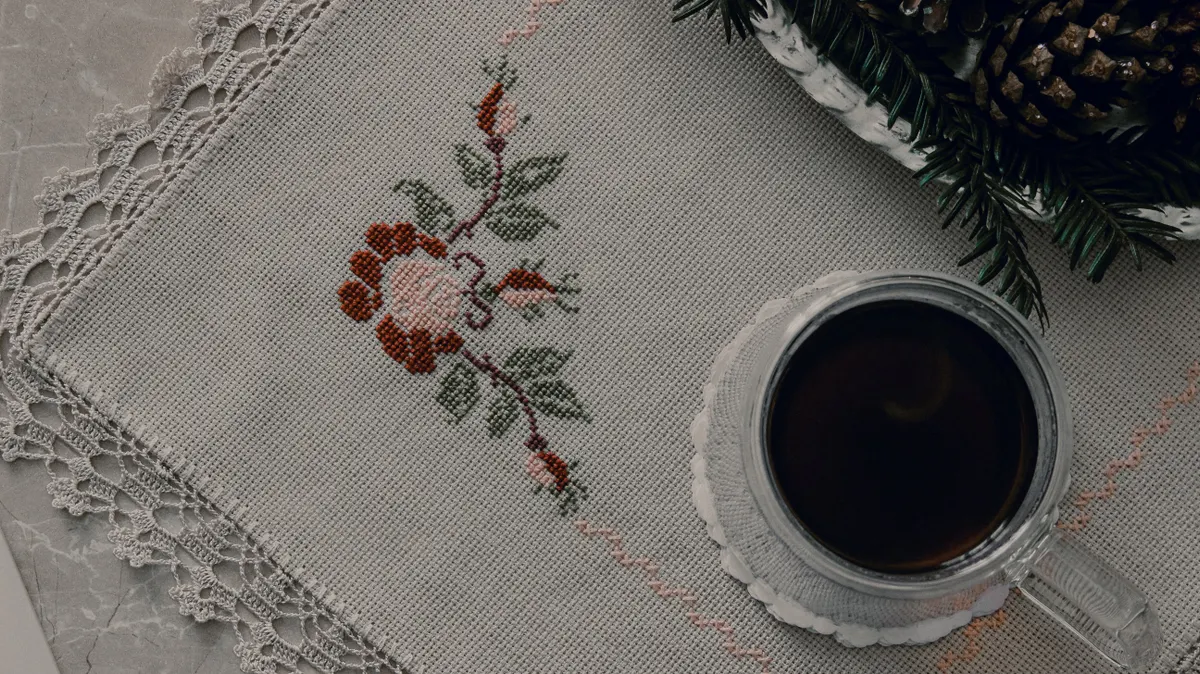
Cutting threads out of your own fabric on purpose sounds like a mistake, but in hardanger embroidery, that's exactly the point. This traditional Norwegian whitework technique combines satin stitch blocks with careful cutwork, creating lacy geometric patterns that look far more complicated than they actually are.
This article is part of our Embroidery & Cross-Stitch Techniques Explained series, and it walks through everything needed to start your first hardanger piece with confidence.
What Is Hardanger Embroidery?
Hardanger needlework gets its name from the Hardanger region of Norway, where the technique developed as a way to decorate household linens. Unlike regular cross-stitch, hardanger works entirely in white or cream thread on matching fabric, which is why it's often called Norwegian whitework embroidery.
I've unpicked more knotted thread than I'd like to admit while learning hardanger, and I've found that most beginner frustration traces back to tension, not skill. The technique looks intricate once finished, but each individual step is simple, worked slowly and evenly.
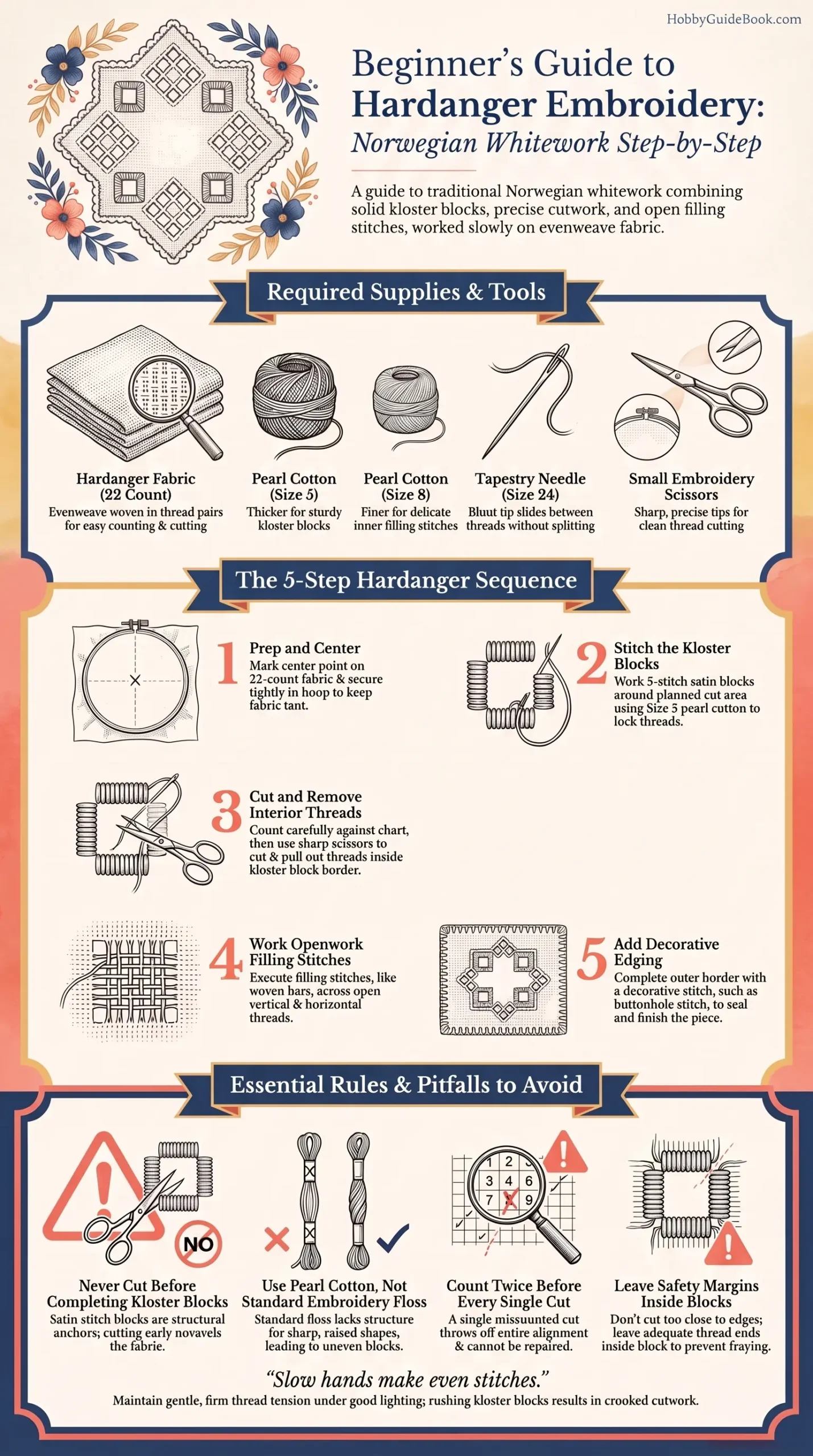
Photo Credit: Hobby Guidebook Editorial
What Is Hardanger Embroidery Used For?
Hardanger traditionally decorates household linens like tablecloths, napkins, and doilies, since the open, lacy cutwork sections let light pass through the fabric. It also shows up on christening gowns, bookmarks, and framed hoop art, where the geometric pattern becomes the entire design.
Modern stitchers use hardanger for smaller accent pieces too, like coasters or ornament fronts. Because the technique combines solid stitching with open cutwork, it works well anywhere a delicate, textured look fits better than solid embroidery.
Materials Needed for Hardanger Embroidery
Hardanger relies on very specific fabric and thread choices, since the technique depends on cutting individual threads cleanly without fraying the surrounding fabric.
|
Material |
Purpose |
|
Hardanger fabric (22 count) |
Evenweave fabric woven in pairs of threads |
|
Pearl cotton, size 5 |
Thicker thread for kloster blocks |
|
Pearl cotton, size 8 |
Finer thread for filling stitches |
|
Tapestry needle, size 24 |
Blunt tip for evenweave stitching |
|
Small, sharp embroidery scissors |
Precise thread cutting |
|
Embroidery hoop |
Keeps fabric taut while stitching |
Hardanger fabric is woven with threads grouped in pairs, which makes counting and cutting far easier than on regular Aida or linen. Our Embroidery Floss & Thread Types guide covers how pearl cotton differs from standard six-strand floss, if you're new to working with it.

Photo Credit: Connor Scott McManus
How Do You Work Hardanger Embroidery Step by Step?
Hardanger follows a clear order, and skipping steps or working out of sequence is one of the fastest ways to end up with a mess.
- Mark your center point on the fabric, using a hoop to keep everything taut and even.
- Stitch the kloster blocks first, working satin stitch blocks of five stitches each around the area you plan to cut. These blocks lock the fabric threads in place before any cutting happens.
- Cut and remove threads from inside the kloster block border, following your pattern exactly and counting carefully before every cut.
- Work filling stitches, like woven bars or needle weaving, across the open threads left behind.
- Add decorative edging, such as buttonhole stitch, around the outer border to finish the piece cleanly.
Our Hardanger Kloster Blocks Technique guide breaks down step two in much more detail, since getting kloster blocks right sets up the entire rest of the design.
What Fabric, Thread, and Needle Work Best?
22 count hardanger fabric is the traditional choice, since its paired threads make counting and cutting far more manageable for beginners. Some stitchers start on 18 count fabric instead, which gives slightly larger, easier to see blocks while learning.
Pearl cotton works better than standard floss for hardanger, since its twisted structure holds up well against the tension of satin stitch blocks. Size 5 pearl cotton handles the kloster blocks, while size 8 works the finer filling stitches inside the cut areas.
A blunt tapestry needle, usually size 24, slides between fabric threads without splitting them, which matters even more on evenweave than it does on Aida. Our Redwork Embroidery guide covers a different traditional whitework-adjacent style, if you enjoy the historical roots behind hardanger and want to explore more.
How Do You Keep the Stitches Even and Consistent?
Even tension makes or breaks a hardanger piece, since any looseness shows clearly against the open, lacy background.
- Keep the fabric taut in a hoop throughout the entire kloster block stage.
- Pull thread firmly but gently, avoiding the urge to yank it tight after each stitch.
- Count threads twice before cutting, since hardanger doesn't forgive miscounted cuts easily.
- Work in good lighting, since the white-on-white color scheme makes stitches hard to see under dim light.
"Slow hands make even stitches." That advice holds up especially well here, since rushing the kloster blocks almost always shows up later as uneven cutwork.
What Mistakes Are Most Common?
Beginners tend to run into the same few issues when starting hardanger, and knowing them ahead of time helps avoid real frustration.
- Cutting before finishing the kloster blocks. Always complete and check your satin stitch blocks before touching scissors to fabric.
- Miscounting threads. A single thread off can throw an entire section out of alignment, so double-check counts against the chart every time.
- Using floss instead of pearl cotton. Standard floss doesn't hold its shape the way pearl cotton does, leading to flat, uneven kloster blocks.
- Cutting too close to the kloster block edge. Leave enough thread inside the block to prevent fraying once the surrounding threads are removed.
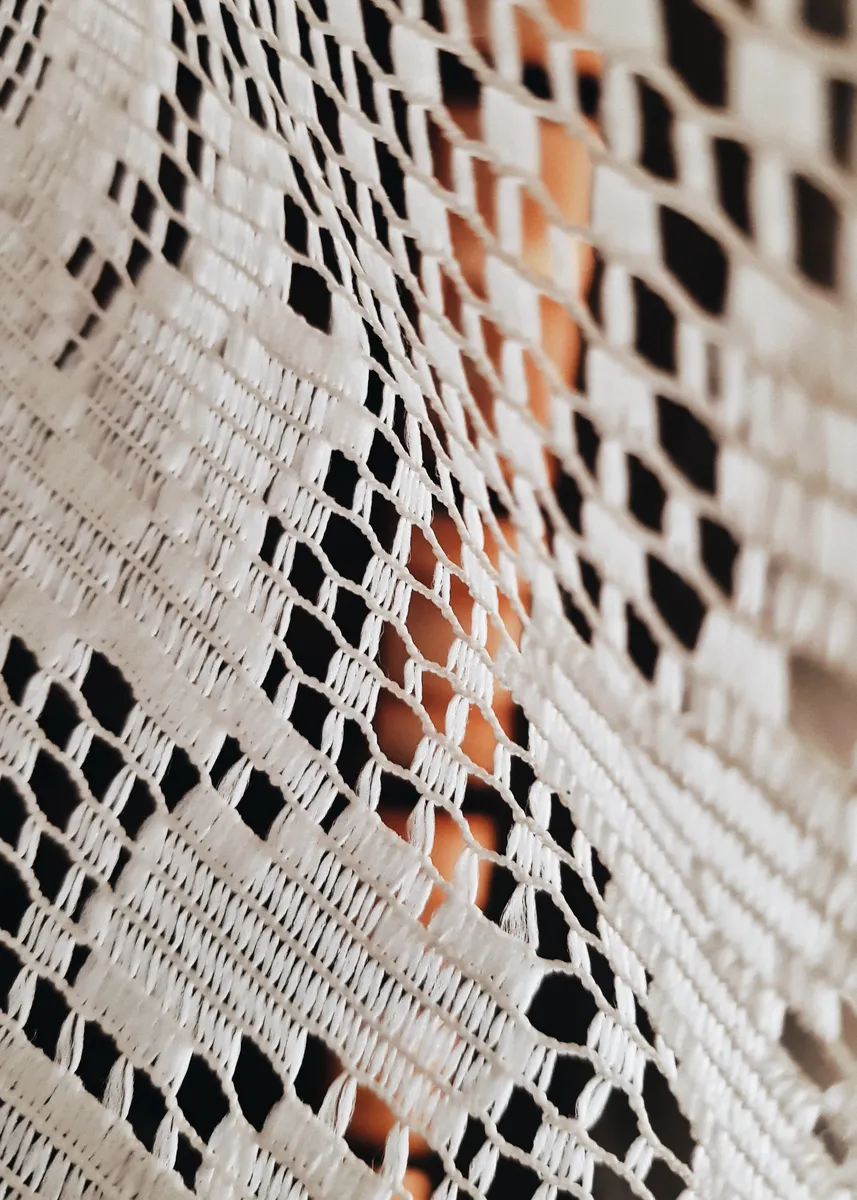
Photo Credit: Andre Moura
A quick safety note, always use small, sharp embroidery scissors made for thread cutting, and cut slowly with the tips pointed away from the fabric's woven structure. Rushing a cut is the single most common way hardanger projects get accidentally damaged.
Frequently Asked Questions
What is hardanger embroidery used for? It's traditionally used for household linens, doilies, and framed decorative pieces.
How do you work hardanger embroidery step by step? Start with kloster blocks, cut the threads inside them, then fill the open area with woven stitches.
What fabric, thread, and needle work best? 22 count hardanger fabric, pearl cotton in sizes 5 and 8, and a size 24 tapestry needle.
How do you keep the stitches even and consistent? Keep fabric taut in a hoop, pull thread gently, and work in good lighting throughout.
What mistakes are most common? Cutting before finishing kloster blocks and miscounting threads cause most beginner problems.
Final Thoughts
Hardanger looks like lacework magic once finished, but every open, delicate section starts with the same steady, countable steps. Practice a few kloster blocks on scrap fabric first, and the whole technique will click faster than expected.
For more, check out the full embroidery & cross-stitch guide.





Leave a Reply