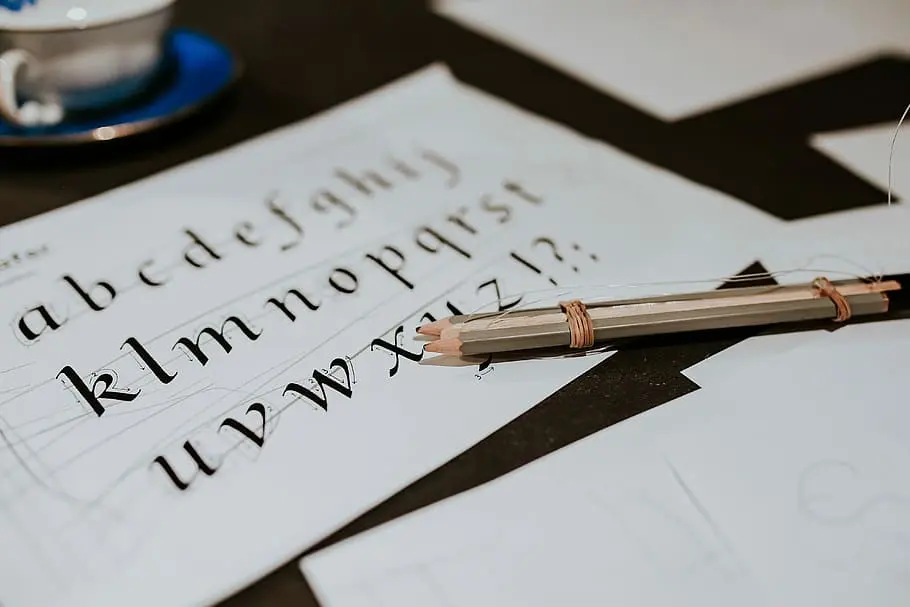
I can usually tell within a stroke or two whether someone's grip is fighting the pen or working with it, and nine times out of ten, that single fix solves half their other problems too. Beginner calligraphy mistakes tend to cluster around the same few habits, which is actually good news, because it means they are predictable and fixable.
This guide is part of Getting Started with Calligraphy, and it walks through the calligraphy mistakes to avoid most often, plus practical fixes for each one.
Why These Mistakes Happen So Often
New calligraphers are usually managing several new skills at once: pen angle, pressure, letter shape, and pacing, all at the same time. Something has to give, and it is usually consistency.
I have found that almost every beginner mistake traces back to one of three root causes: rushing, gripping too tightly, or skipping foundational stroke practice. Fix those three things, and most other problems fade on their own.
What Are the Most Common Mistakes Beginners Make in Calligraphy
Here are the mistakes I see repeated most often across new students, regardless of whether they start with a brush pen or a dip pen.
- Jumping straight into full alphabets. Skipping basic stroke drills means building letters on shaky fundamentals.
- Gripping the pen too tightly. A tense grip fights the pen instead of guiding it, which shows up as jagged, uneven lines.
- Writing too fast. Calligraphy relies on slow, controlled movement, and rushing defeats that completely.
- Ignoring guideline sheets. Freehand practice without baseline and x-height guides makes inconsistency much harder to catch.
- Using the wrong paper. Textured or toothy paper snags a nib and causes ink splatters, which frustrates beginners unnecessarily.
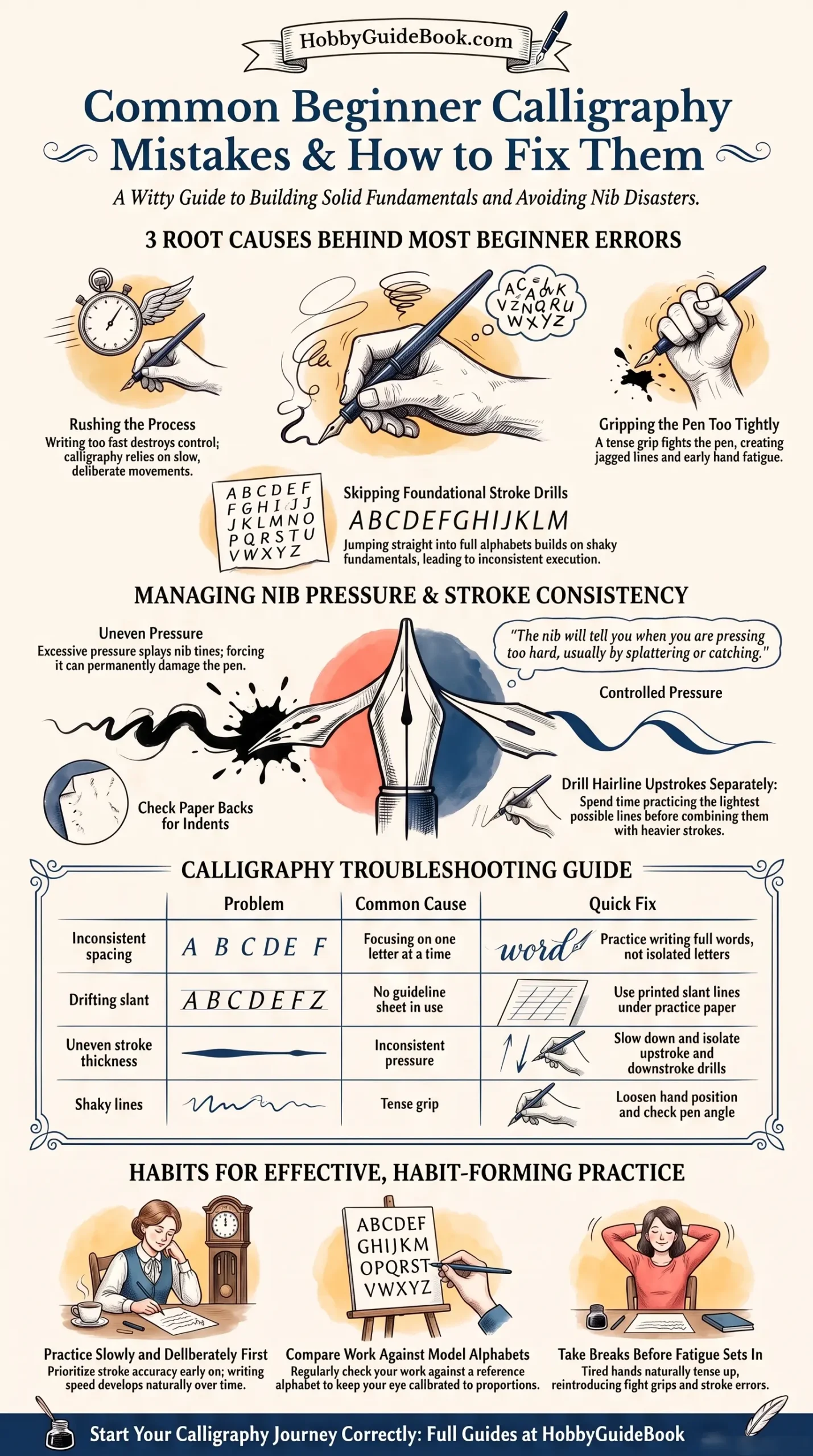
Photo Credit: Hobby Guidebook Editorial
Why Do My Calligraphy Letters Look Inconsistent
This is one of the most common questions I hear, and it almost always comes down to uneven pressure or an unstable pen angle. If your downstrokes vary in thickness from letter to letter, your hand is likely applying pressure differently each time rather than consistently.
Inconsistent slant is another common culprit. Without a guideline sheet showing the correct angle, letters naturally drift in different directions across a line, especially as your hand gets tired.
For a deeper breakdown of exactly why strokes vary and how to fix it stroke by stroke, why are my calligraphy strokes inconsistent covers this in more detail than a quick summary can.
How Do You Avoid Applying Too Much Pressure to the Nib
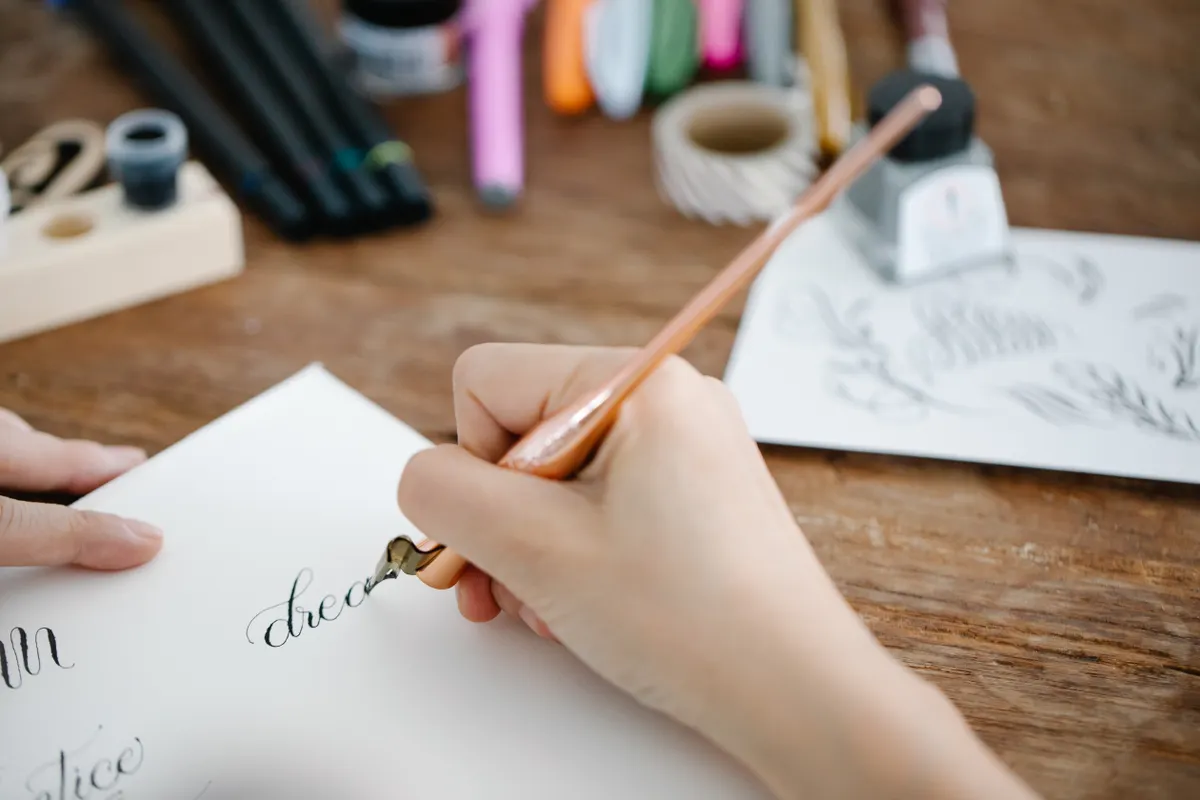
Too much pressure is one of the most damaging habits for a beginner, since it can actually splay a pointed pen nib's tines apart or cause a broad-edge nib to catch and splatter.
- Loosen your grip first. A relaxed hand naturally applies lighter pressure than a tense one.
- Practice hairline upstrokes separately. Spend a few minutes drilling only the lightest possible lines before combining them with heavier downstrokes.
- Let the nib do the work. A quality nib flexes on its own with light pressure. Forcing it usually damages the tines rather than improving the line.
- Check your paper for tears or embossing. If pressure is leaving visible indents on the back of your paper, you are pressing harder than needed.
"The nib will tell you when you are pressing too hard, usually by splattering or catching on the paper." That warning gets repeated often among calligraphy teachers, and it is worth listening to early rather than after damaging a good nib.
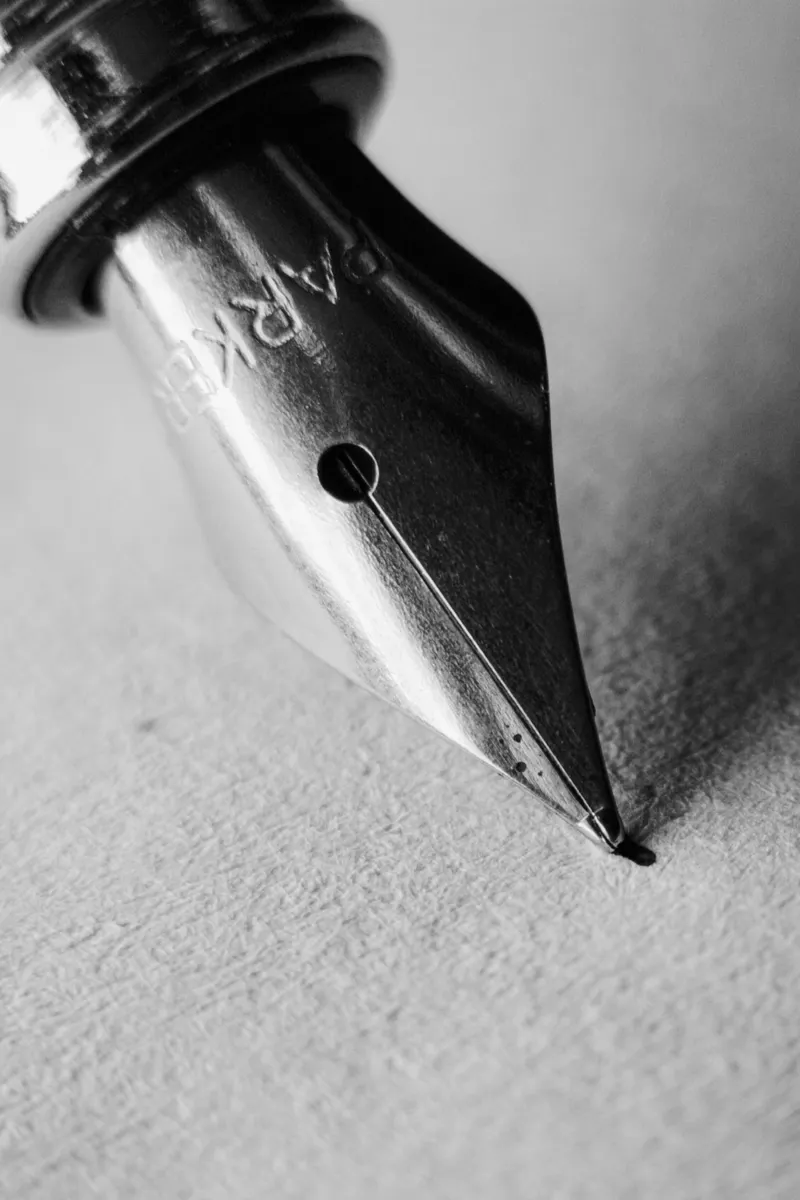
Photo Credit: Prashant pacific
Why Do Beginners Struggle With Spacing and Slant
Spacing problems usually come from writing letter by letter without thinking about the whole word. Beginners tend to leave inconsistent gaps, cramming some letters close together while spacing others too far apart.
Slant issues often stem from skipping guideline sheets altogether. Without slant lines to reference, your hand defaults to whatever angle feels natural in the moment, which shifts throughout a practice session.
|
Problem |
Common Cause |
Quick Fix |
|
Inconsistent spacing |
Focusing on one letter at a time |
Practice writing full words, not isolated letters |
|
Drifting slant |
No guideline sheet in use |
Use printed slant lines under practice paper |
|
Uneven stroke thickness |
Inconsistent pressure |
Slow down and isolate upstroke and downstroke drills |
|
Shaky lines |
Tense grip |
Loosen hand position and check pen angle |
How Can You Improve Calligraphy Without Practicing Bad Habits
Repetition without correction just reinforces whatever habit you already have, good or bad. This is why mindless repetition is not the same as effective practice.
- Practice slowly and deliberately. Speed comes naturally later, but accuracy needs to come first.
- Use guideline sheets every session. Consistent baselines and slant lines catch drifting habits before they become permanent.
- Compare your work to a reference regularly. Looking back at a model alphabet keeps your eye calibrated to what correct proportions actually look like.
- Take breaks before fatigue sets in. Tired hands tense up, and tense grip is where a lot of these mistakes start in the first place.
A quick safety note as well. If you are using a dip pen, avoid pressing hard enough to splay the nib's tines, since a damaged nib can catch on paper and cause unexpected ink spatter.
If you are wondering whether these struggles mean calligraphy simply is not for you, it almost certainly is not that. Is calligraphy hard to learn covers realistic timelines and expectations for beginners working through exactly these issues.
Photo Credit: Sedanur Kunuk
Frequently Asked Questions
What are the most common mistakes beginners make in calligraphy? The most common mistakes are skipping basic strokes, gripping too tightly, writing too fast, ignoring guidelines, and using the wrong paper.
Why do my calligraphy letters look inconsistent? Inconsistent letters usually come from uneven pressure or an unstable pen angle, both of which improve with slower, guided practice.
How do you avoid applying too much pressure to the nib? Loosen your grip, practice light upstrokes separately, and let the nib flex naturally instead of forcing pressure onto it.
Why do beginners struggle with spacing and slant? Spacing struggles come from focusing on single letters instead of full words, while slant issues usually come from skipping guideline sheets.
How can you improve calligraphy without practicing bad habits? Practice slowly with guideline sheets, compare your work to a reference often, and take breaks before fatigue causes tension.
Mistakes Are Part of the Process
Every calligrapher I know, myself included, made every mistake on this list at some point. Recognizing them early just means fixing them faster than you otherwise would.
For everything else this hobby covers, from tools to strokes to full scripts, read the full calligraphy and hand lettering guide.



Leave a Reply