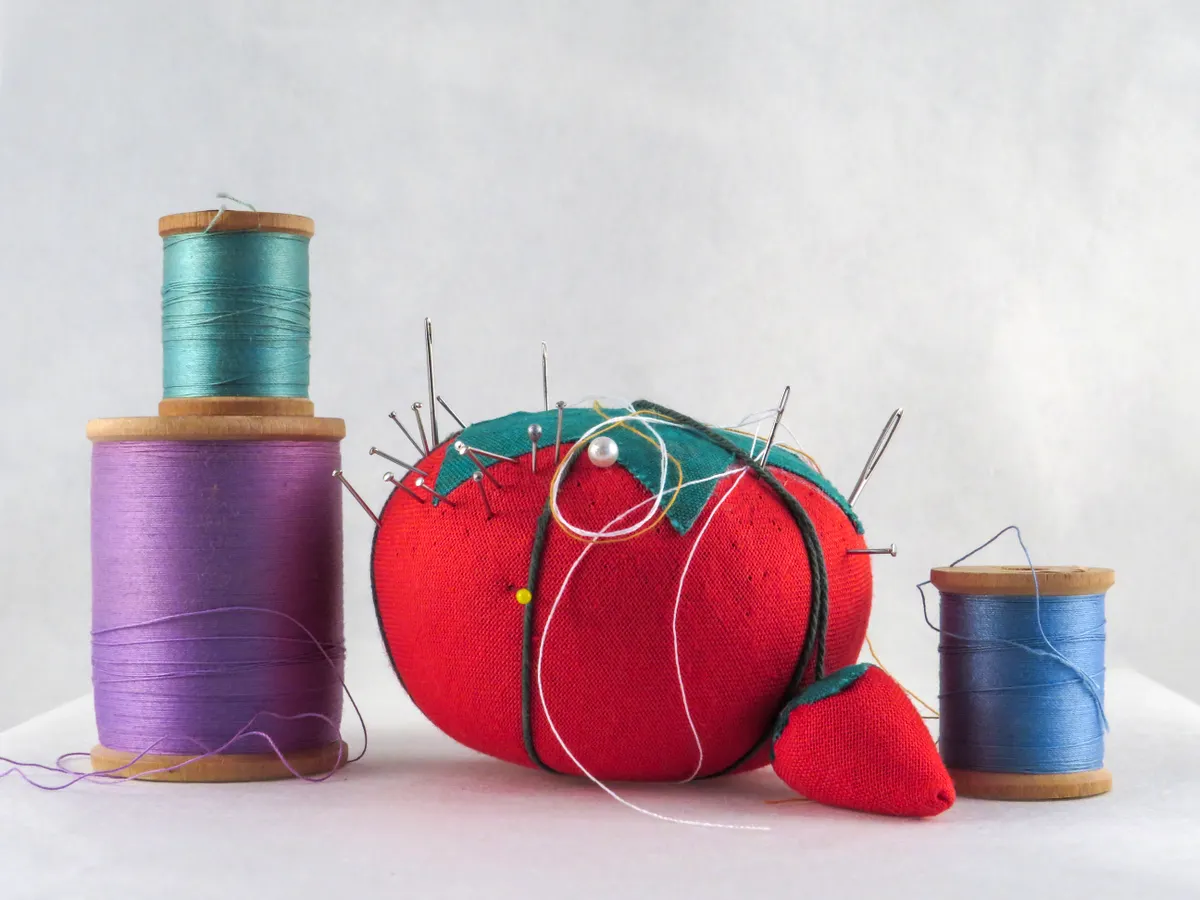
Grab the wrong needle and even perfect tension won't save your stitches, since thread that's too thick for the eye frays, and a needle too fat for the fabric leaves visible holes behind. Getting embroidery needles right from the start makes every other technique easier to learn.
This article is part of our Embroidery & Cross-Stitch Materials & Tools Guide, and it covers the main needle types, how sizing works, and which needle actually suits your project.
What Are the Main Types of Embroidery Needles?
Embroidery needles come in a few main types, each built for a specific job: crewel needles for general hand embroidery, chenille needles for thicker thread and ribbon work, and tapestry needles for counted cross-stitch on even-weave fabric. The differences come down to the eye size and the point, whether sharp or blunt.
Picking the right type matters more than most beginners expect, since the wrong needle can distort your fabric weave or make threading genuinely frustrating.

Photo Credit: Hobby Guidebook Editorial
Why Needle Choice Feels Confusing at First
I've unpicked more knotted thread than I'd like to admit, and for a long time I blamed my thread quality instead of my needle. It turned out a lot of that fraying came from forcing floss through an eye too small for it, which shreds strands with every pull.
Most beginner frustration traces back to tension, not skill, and needle choice plays a bigger role in that tension than people realize, since the wrong needle drags against fabric instead of gliding through it.
What Fabric, Thread, and Needle Work Best?
The right needle depends on your fabric weave, thread thickness, and the stitch technique you're using.
|
Needle Type |
Point |
Best For |
|
Crewel needle |
Sharp |
General hand embroidery on woven fabric like cotton or linen |
|
Chenille needle |
Sharp, large eye |
Thick thread, ribbon embroidery, or heavier stitching |
|
Tapestry needle |
Blunt |
Counted cross-stitch and even-weave fabric, avoids splitting threads |
|
Milliner needle |
Sharp, long shaft |
Wrapped stitches like French knots or bullion knots |
How Do You Choose the Right Needle Size for a Project?
Embroidery needle sizes work on a numbered scale, and the rule is simple once you know it: the higher the number, the finer and shorter the needle.
- Check your thread thickness first, since thicker floss needs a larger eye to thread cleanly.
- Match the needle to your fabric weight, using finer needles on lightweight fabric and sturdier needles on heavier weaves.
- Pick a size in the middle range to start, since sizes 7-9 crewel needles handle most beginner projects comfortably.
- Test threading before starting your project, adjusting size up or down if floss feels tight or the needle leaves visible holes.
- Switch needles between techniques, moving from crewel to tapestry if your project shifts from surface stitching to counted work.

Photo Credit: Ann Hannes
For a full breakdown of exact sizes and what they're rated for, our embroidery needle size chart lays out every common size side by side.
Which Embroidery Needle Is Best for Beginners?
A size 7-9 crewel needle is the best starting point for most beginners, since its sharp point handles woven fabric well and its eye is large enough to thread two or three strands of floss without much struggle.
Crewel needles are also versatile enough to carry you through most basic stitches, from satin stitch to French knots, before you need anything more specialized.
What Is the Difference Between Crewel, Chenille, and Tapestry Needles?
This comparison trips up a lot of beginners, so it's worth spelling out clearly.
Crewel needle vs chenille needle comes down to eye size and thread thickness. Crewel needles have a medium eye suited to regular stranded floss, while chenille needles have a much larger eye built for thick thread, yarn, or ribbon, though both share a sharp point for piercing woven fabric.
Tapestry needles are different again, since their blunt tip is designed to slide between the threads of even-weave fabric instead of piercing through them, which matters a lot for counted cross-stitch where splitting the base fabric threads causes uneven, distorted stitches.
"The needle should disappear into your rhythm, not fight you every stitch." That's proven true across every project I've worked, since the right needle genuinely fades into the background once it fits the job.
If you're working counted cross-stitch specifically, our cross-stitch needles and tools guide covers tapestry sizing and other tools built for charted grid work.
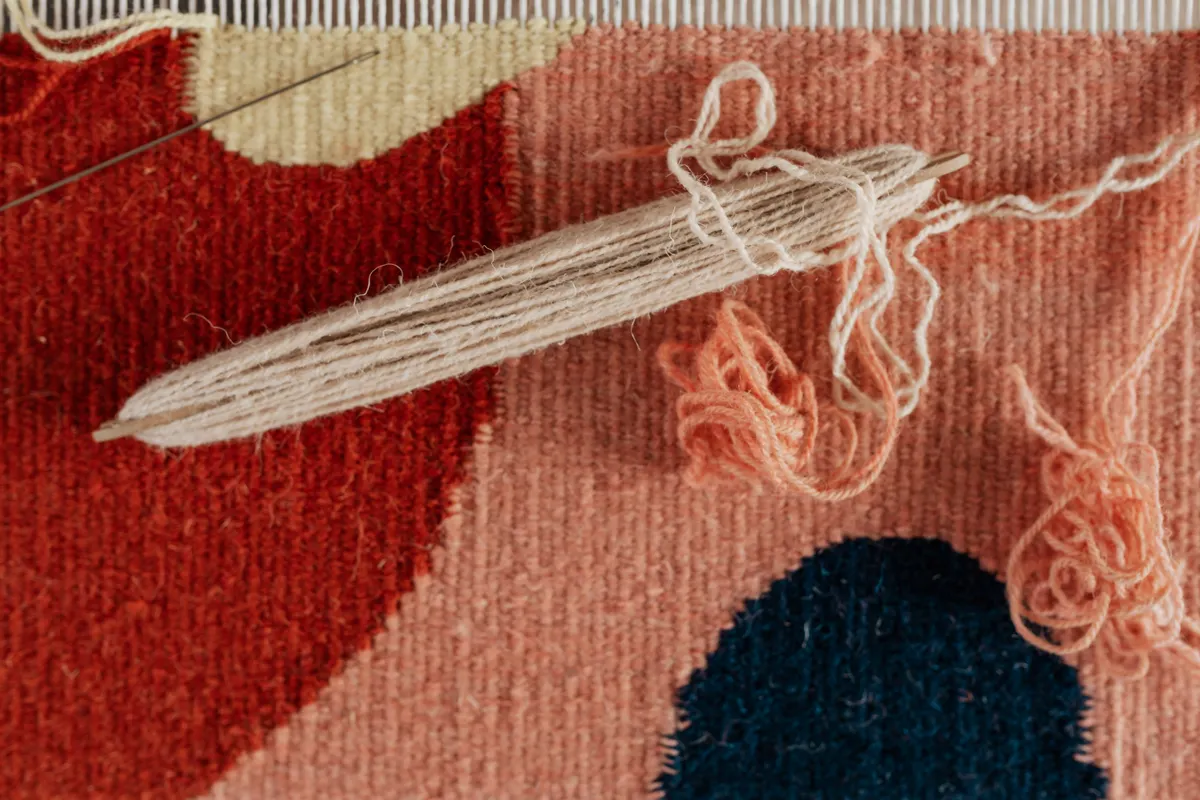
Photo Credit: https://kaboompics.com/
How Do Fabric and Thread Thickness Affect Needle Choice?
Fabric weight and thread thickness work together, not separately, when picking a needle.
- Lightweight fabric with fine thread pairs well with a smaller crewel needle, avoiding holes larger than necessary
- Heavier fabric with thick thread or ribbon calls for a chenille needle, since the larger eye accommodates bulkier material
- Even-weave fabric for counted work always pairs with a tapestry needle, regardless of thread thickness, to protect the weave
- Multiple floss strands generally need a slightly larger eye than single-strand projects, even on the same fabric
What Mistakes Are Most Common?
A few habits trip up most beginners choosing embroidery needles.
- Using a needle too small for the thread, forcing floss through and causing it to fray or shred
- Choosing a sharp needle for counted cross-stitch, splitting fabric threads instead of sliding between them
- Sticking with one needle for every project, ignoring how fabric and thread changes actually affect the right choice
- Storing needles loose in a pincushion without labels, making it hard to grab the right size quickly
Safety note: keep needles stored in a labeled case or pincushion rather than loose on a table, especially if kids or pets are around your workspace.
Frequently Asked Questions
What are the main types of embroidery needles? The main types are crewel needles for general work, chenille needles for thick thread, tapestry needles for counted cross-stitch, and milliner needles for wrapped stitches.
How do you choose the right needle size for a project? Match needle size to thread thickness and fabric weight, starting with a size 7-9 crewel needle for most beginner projects.
Which embroidery needle is best for beginners? A size 7-9 crewel needle works best for beginners, since it handles woven fabric well and threads easily with standard floss.
What is the difference between crewel, chenille, and tapestry needles? Crewel needles have a medium eye for regular floss, chenille needles have a larger eye for thick thread, and tapestry needles have a blunt tip for even-weave fabric.
How do fabric and thread thickness affect needle choice? Thicker thread needs a larger eye, heavier fabric supports a sturdier needle, and even-weave fabric always calls for a blunt tapestry needle.
Final Thoughts
Embroidery needles explained simply come down to matching eye size and point type to your fabric and thread. Start with a basic crewel needle, notice how it feels against different fabrics, and choosing the right needle for future projects will start feeling automatic.
For more on getting started, read the full embroidery & cross-stitch guide.



Leave a Reply