Get one thread count wrong on a kloster block, and you won't find out until scissors are already touching fabric. Hardanger kloster blocks are the foundation of every cutwork section, which makes this the single most important skill to get right before moving forward.
This article is part of our Hardanger Embroidery guide, and it breaks down exactly how to stitch these blocks accurately every time.
What Is a Kloster Block in Hardanger Embroidery?
A kloster block is a small group of satin stitches, usually five stitches worked side by side, that anchors the fabric threads before any cutting happens. Think of it as a fence, holding everything in place so the open cutwork sections underneath don't unravel.
I've unpicked more knotted thread than I'd like to admit while learning kloster block stitching, and nearly every mistake traced back to rushing this exact step. Once kloster blocks click, the rest of hardanger starts falling into place much faster.
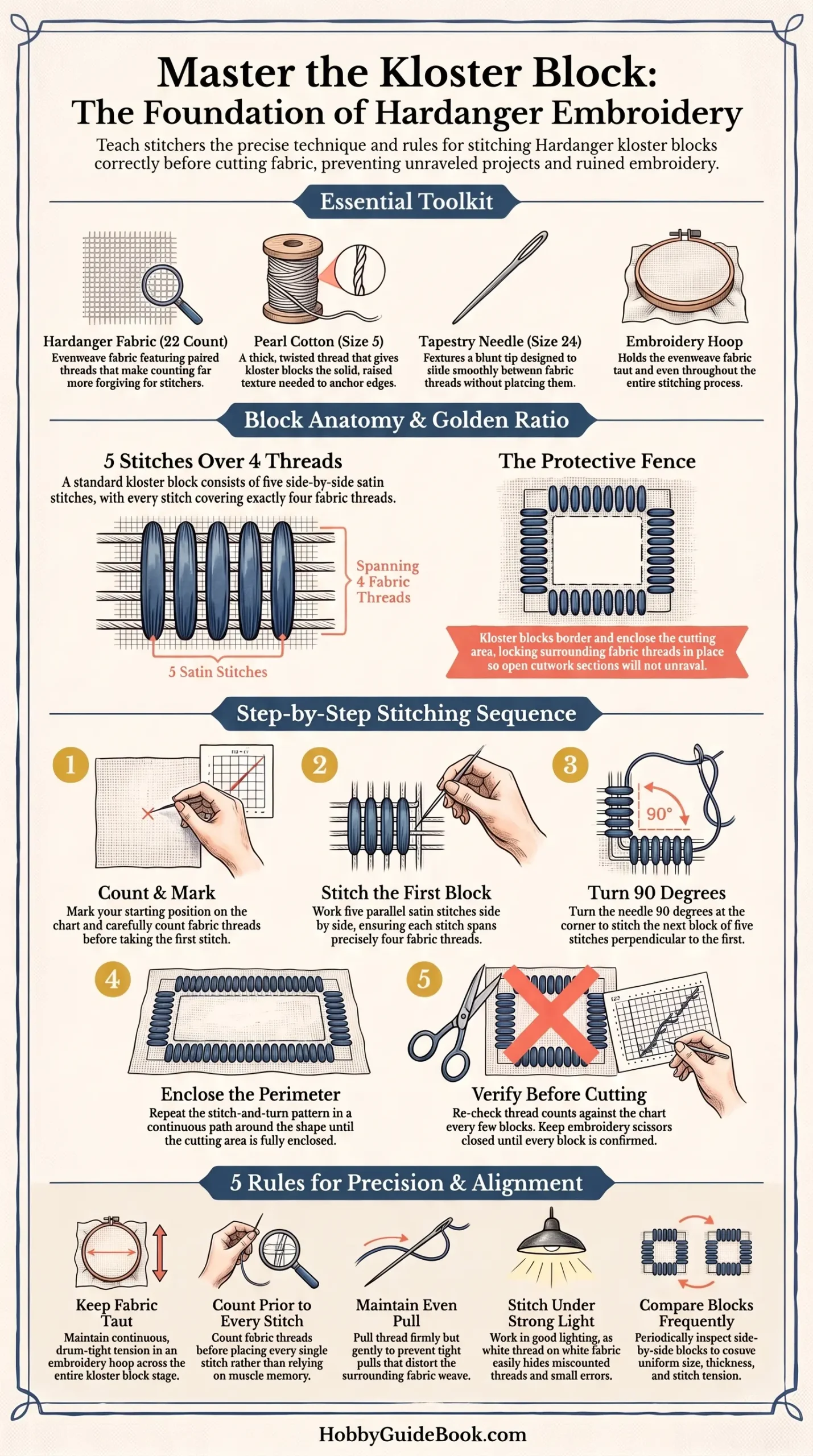
Photo Credit: Hobby Guidebook Editorial
Materials Needed for Kloster Blocks
Kloster blocks depend on the right thread weight, since thinner floss won't create the solid, raised texture this technique needs.
|
Material |
Purpose |
|
Hardanger fabric (22 count) |
Evenweave fabric with paired threads |
|
Pearl cotton, size 5 |
Thick thread for solid satin blocks |
|
Tapestry needle, size 24 |
Blunt tip that slides between threads |
|
Embroidery hoop |
Keeps fabric taut and even |
How Do You Stitch Kloster Blocks Step by Step?
Kloster blocks follow a simple, repeatable pattern, but every stitch needs to land exactly where it belongs.
- Mark your starting point on the chart, counting threads carefully before the first stitch.
- Stitch five satin stitches side by side, each one covering the same number of fabric threads.
- Turn the needle 90 degrees at the corner, continuing the next block of five stitches perpendicular to the first.
- Repeat around the shape, working blocks in a continuous path until the cutting area is fully enclosed.
- Check your count against the chart after every few blocks, since a single miscount throws off everything that follows.
How Many Fabric Threads Does a Typical Kloster Block Cover?
A standard kloster block covers four fabric threads, with each of the five stitches sitting on top of those same four threads. On 22 count hardanger fabric, that translates to a small, tidy block roughly matching the width of the cutting area it borders.
Our Hardanger Cutwork Technique guide explains exactly how block width lines up with the threads you'll remove later, which makes planning ahead much easier.
Photo Credit: Aritz Vicarregui
Why Must Kloster Blocks Be Stitched Accurately Before Cutting?
Kloster blocks lock the surrounding fabric threads in place, which is the only thing preventing the whole piece from unraveling once cutting begins. If a block sits even one thread off, the cut edge next to it will fray instead of staying clean and secure.
"Measure it, count it, then stitch it." That old rule fits kloster blocks perfectly, since checking thread counts twice costs far less time than unpicking a crooked block later.
What Thread and Fabric Are Used for Kloster Blocks?
Hardanger satin stitch blocks almost always use pearl cotton, since its twisted structure holds shape and thickness better than standard six strand floss. Size 5 pearl cotton is the standard weight for kloster blocks specifically, giving each stitch enough body to sit raised above the fabric surface.
22 count hardanger fabric remains the go-to choice, thanks to its paired thread weave that makes counting far more forgiving for beginners. Our Hardanger Project Ideas guide shows a few small patterns that are perfect for practicing kloster blocks before jumping into a larger design.
How Do You Keep Kloster Blocks Even and Aligned?
- Keep the fabric taut in a hoop throughout the entire kloster block stage.
- Count threads before every stitch, rather than trusting muscle memory alone.
- Pull thread firmly but evenly, avoiding tight pulls that distort the fabric weave.
- Work in good lighting, since white thread on white fabric hides mistakes easily.
- Compare blocks side by side periodically, checking that each one matches in size and tension.
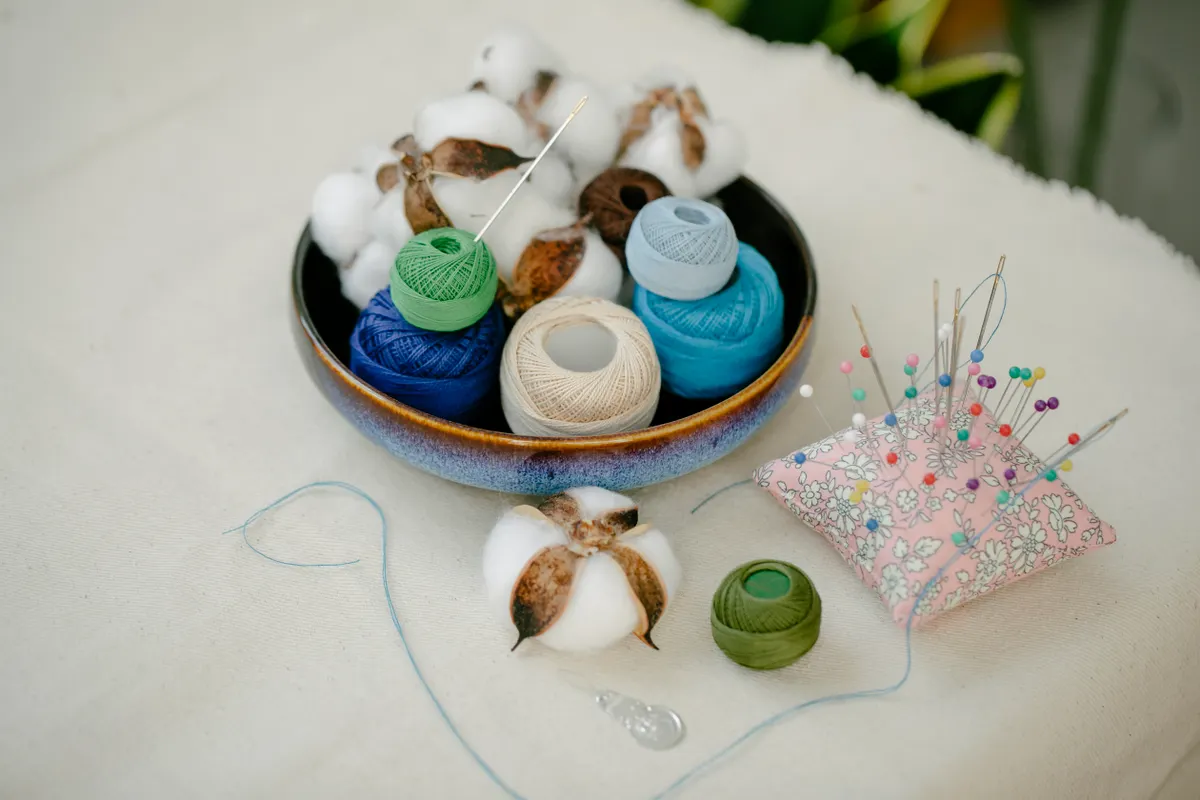
Photo Credit: Teona Swift
A quick safety note, keep your embroidery scissors closed and stored away until every kloster block is checked and confirmed against the chart, since cutting early is the most common way hardanger projects get damaged beyond repair.
Frequently Asked Questions
What is a kloster block in Hardanger embroidery? It's a group of satin stitches that anchors fabric threads before cutwork begins.
How many fabric threads does a typical kloster block cover? Most blocks cover four fabric threads, matching five stitches across that width.
Why must kloster blocks be stitched accurately before cutting? Accurate blocks lock threads in place, preventing fraying once nearby threads are cut.
What thread and fabric are used for kloster blocks? Size 5 pearl cotton on 22 count hardanger fabric is the standard combination.
How do you keep kloster blocks even and aligned? Count threads carefully, keep tension even, and compare blocks as you work.
Final Thoughts
Kloster blocks might look small, but they carry the entire structure of a hardanger design on their shoulders. Slow down, count twice, and every block after that will fall into place with confidence.
For more, check out the full embroidery & cross-stitch guide.





Leave a Reply