You hold your hoop up to the light and half your Xs look tight and crisp while the rest look loose and floppy, like two different people stitched them. A loose uneven cross-stitch fix usually comes down to one habit, and once you spot it, fixing the rest of your piece gets a lot easier.
This article is part of our Common Embroidery & Cross-Stitch Questions & Comparisons, and it covers what causes uneven stitching, how to fix it, and when it's actually time to unpick and start that section over.
What Usually Causes Loose or Uneven Cross-Stitch?
Uneven cross-stitch almost always comes from inconsistent thread tension, meaning some stitches get pulled snug while others get left slightly slack. I've unpicked more knotted thread than I'd like to admit, and this exact cross-stitch tension problems issue was what finally taught me that most beginner frustration traces back to tension, not skill.
Switching hand position mid-project, rushing through a row, or resting your hoop on your lap instead of a stand all change how much pull each stitch gets. That inconsistency is what makes a finished piece look patchy instead of even.
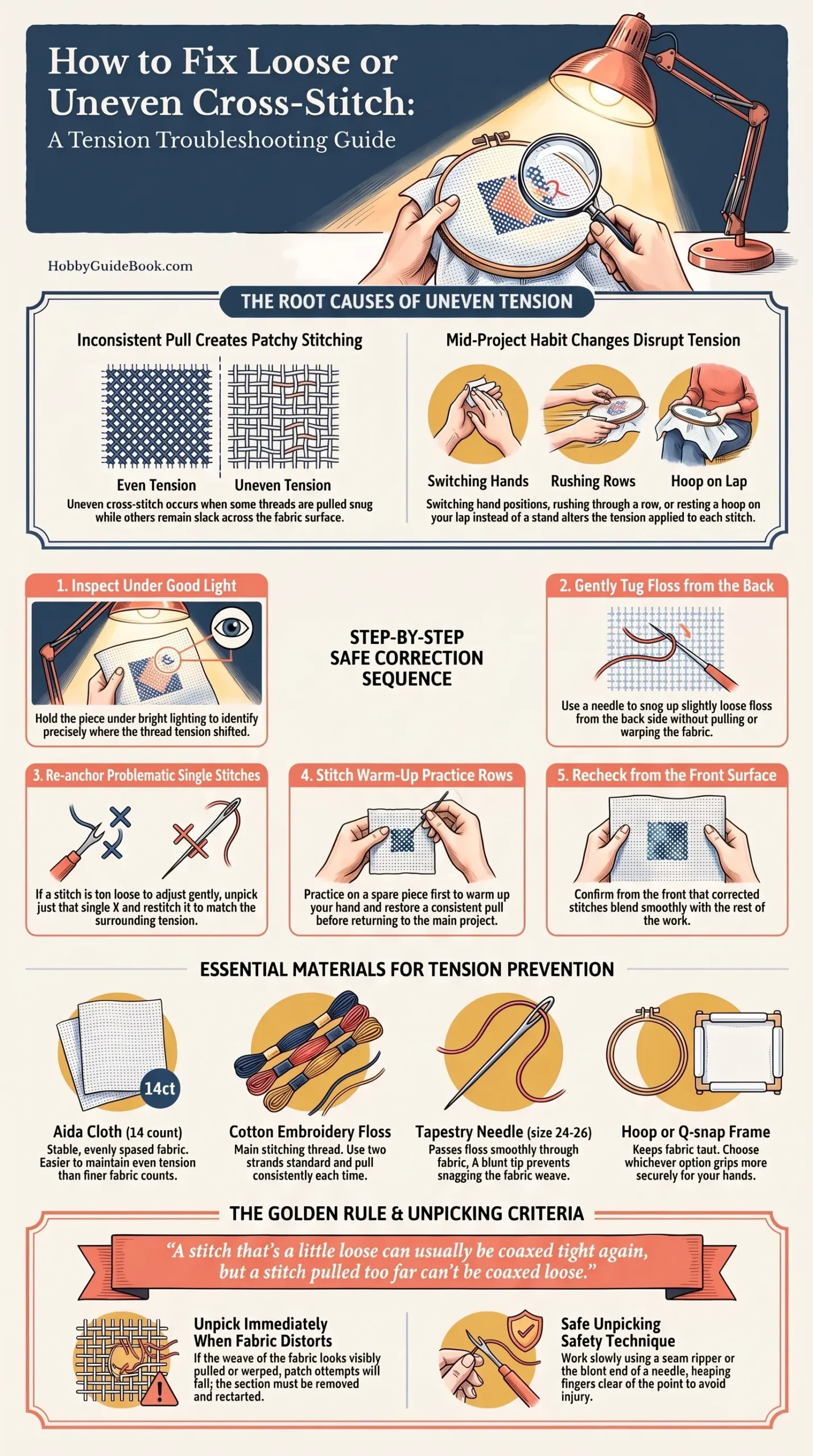
Photo Credit: Hobby Guidebook Editorial
How Can You Fix Loose or Uneven Cross-Stitch Safely?
- Identify the loose stitches, looking closely at your piece under good light to spot where tension shifted.
- Gently tug the floss from the back, using your needle to snug up a slightly loose stitch without pulling the fabric itself.
- Re-anchor if a stitch is too loose to fix, unpicking just that single X and restitching it at matching tension.
- Stitch a few practice rows first, warming up your hand before returning to the real project so your pull feels consistent again.
- Recheck the section from the front, confirming the fixed stitches now blend evenly with the rest.
Getting stitching to a place where it's consistently even is also the point where some stitchers start wondering if their work is good enough to sell. If that's crossed your mind, our guide on making money from embroidery or cross-stitch is worth a look once your tension is solid.
What Material or Technique Changes Can Prevent the Problem?
Working on a stand instead of holding the hoop in your lap keeps both hands free and your pull more consistent stitch to stitch. Using a hoop or Q-snap frame that holds fabric properly taut also reduces slack, since loose fabric makes even tension much harder to judge.
Photo Credit: https://kaboompics.com/
|
Material |
Purpose |
Beginner Tip |
|
Aida cloth (14 count) |
Stable, evenly spaced fabric |
Easier to keep tension even than finer counts |
|
Cotton embroidery floss |
Main stitching thread |
Two strands standard, pull consistently each time |
|
Tapestry needle (size 24-26) |
Passes floss through fabric |
A blunt tip helps avoid snagging the weave |
|
Hoop or Q-snap frame |
Keeps fabric taut |
Choose whichever grips more securely for your hands |
Can the Issue Be Corrected After the Stitches Are Finished?
Yes, in many cases. Slightly loose stitches can often be gently tightened from the back without removing anything, as long as the floss itself isn't damaged or frayed.
"A stitch that's a little loose can usually be coaxed tight again, but a stitch pulled too far can't be coaxed loose." That's held true in my own fixing sloppy stitches sessions, since overtightened Xs tend to distort the fabric in ways gentle tugging can't undo.
Fabric choice plays a role here too. Our Aida vs evenweave fabric comparison breaks down which surface makes even tension easier to maintain for beginners specifically.
When Should You Remove the Stitches and Start Again?
If a section shows visible fabric distortion, meaning the weave itself looks pulled or warped, that's your sign to unpick rather than patch it. Trying to fix distorted fabric without removing the stitches usually just adds a new layer of uneven tension on top of the old problem.
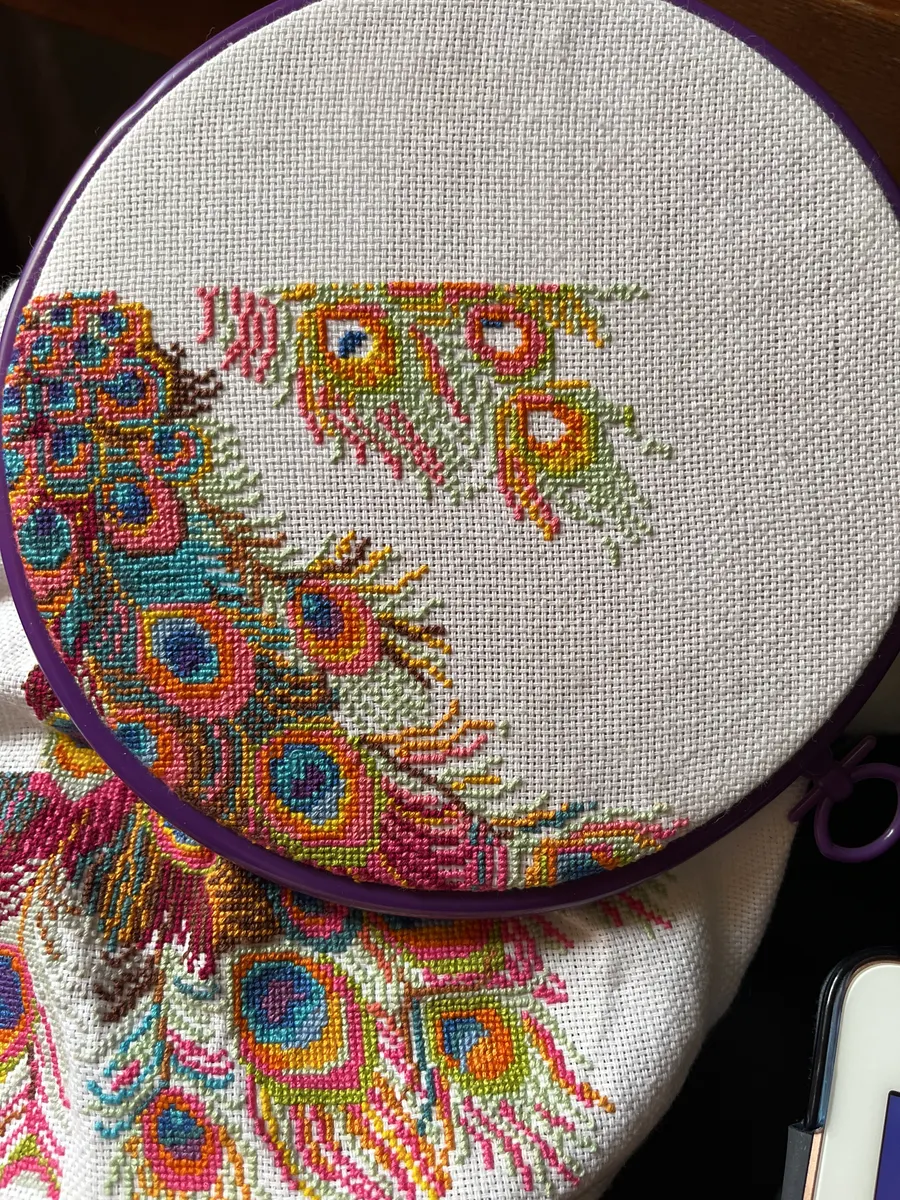
Photo Credit: Olha Krutii
Safety note: when unpicking, work slowly with a seam ripper or the blunt end of your needle, keeping fingers clear of the point to avoid accidental pokes.
Frequently Asked Questions
What usually causes loose uneven cross-stitch? Inconsistent thread tension is the main cause, often from switching hand position or rushing through rows.
How can you fix loose uneven cross-stitch safely? Gently tug loose stitches from the back, or unpick and restitch any section that's too loose to correct that way.
What material or technique changes can prevent the problem? Using a stand or secure hoop, plus stable fabric like 14 count Aida, helps keep tension consistent throughout a project.
Can the issue be corrected after the stitches are finished? Often yes, slightly loose stitches can be gently tightened, though overtightened ones usually need to be redone.
When should you remove the stitches and start again? Remove and restitch whenever the fabric itself looks visibly distorted or warped, not just the thread.
Final Thoughts
Uneven cross-stitch is one of the most fixable problems in this hobby, and it almost always comes back to tension habits you can adjust with practice. Slow down, check your pull regularly, and your stitches will start looking consistent row after row.
For more on getting started, check out the full embroidery & cross-stitch guide.




Leave a Reply