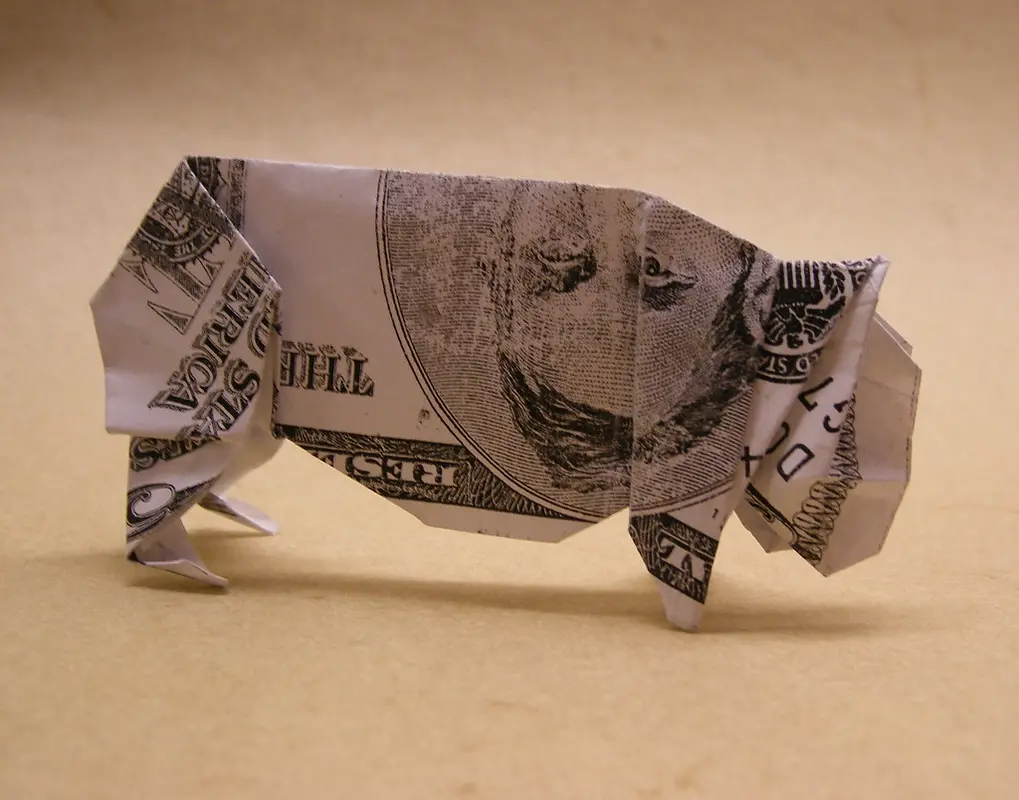
I handed someone a dollar bill folded into a tiny heart once, and their face lit up in a way that a plain folded twenty never gets, proof that a single bill can become something worth keeping instead of just spending. Money origami basic folds are the small set of techniques behind that moment, and once you know them, turning a bill into a ring, star, or simple shape takes just a few minutes.
This tutorial is Part of Money Origami: Folding with Bills, and it covers the easiest folds to start with, how these compare to standard paper origami, which folds work well using just one bill, and how bill orientation affects the finished shape.
What Are the Easiest Money Origami Folds for Beginners?
A handful of folds show up again and again in money origami, and learning these first makes almost every other design far easier to pick up later. The valley fold, mountain fold, and accordion fold form the foundation that most beginner money models are built from.
I've found that the accordion fold trips up more beginners than the other two combined, mostly because it asks you to alternate folding direction in a tight, even rhythm rather than making one clean crease. Dollar bill basic folds like these don't require special paper or tools, which is really what makes money origami such an approachable entry point into folding overall.
Starting with these three folds on their own, before attempting a full model, builds the muscle memory that makes later designs come together much more smoothly.
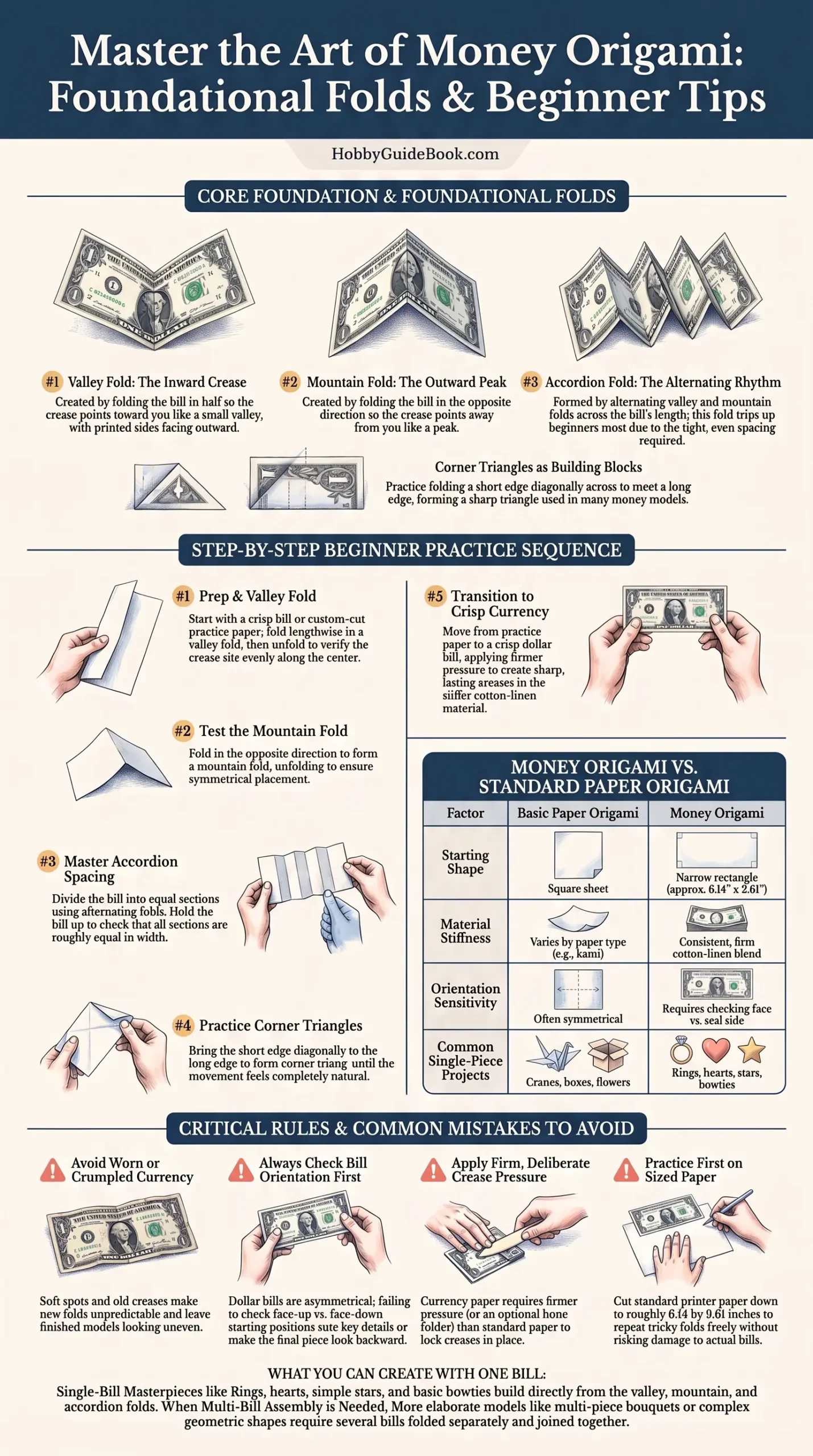
Photo Credit: Hobby Guidebook Editorial
Materials Needed for Money Origami Basic Folds
A short list of items covers everything needed to start practicing these folds.
|
Item |
Purpose |
|
One crisp dollar bill (or practice paper of the same size) |
Provides the standard dimensions most money folds are designed around |
|
Bone folder (optional) |
Creates sharper, more consistent creases than fingernails alone |
|
Flat, firm work surface |
Gives stable support for accurate, even folding |
|
A second bill for practice |
Lets you repeat tricky folds without worrying about damaging your "good" bill |
Does Money Origami Use the Same Basic Folds as Paper Origami?
Money origami genuinely does rely on the same core folds found in standard paper origami, just applied to a smaller, stiffer rectangle instead of a square sheet. Valley folds, where the crease points toward you like a small valley, and mountain folds, where the crease points away like a small peak, work exactly the same way on a bill as they do on any other paper.
Where money origami differs is mostly in proportion and material. A dollar bill's long, narrow shape changes how certain folds behave compared to a square sheet, and the slightly thicker cotton-linen blend most currency is printed on holds creases a bit differently than standard kami paper.
Money origami starting techniques really are just paper origami fundamentals adapted to a specific size and material, which is good news if you've already folded traditional models, since very little here will feel unfamiliar.
How to Practice Money Origami Basic Folds Step by Step
This sequence walks through the three foundational folds in the order most beginners find easiest to build on.
- Start with a valley fold, folding the bill in half lengthwise so the printed sides face outward, then unfold and check that the crease sits evenly along the center.
- Practice a mountain fold next, folding the bill in half the opposite direction so the crease points away from you, again unfolding to confirm it sits evenly.
- Move on to the accordion fold, dividing the bill into equal sections and alternating valley and mountain folds in a steady rhythm across its length.
- Check your accordion spacing by holding the folded bill up and confirming each section looks roughly the same width, adjusting gently if one section is noticeably off.
- Practice folding corners into triangles, a common building block in many money models, by bringing one short edge diagonally across to meet a long edge.
- Repeat each fold type on a spare bill or practice paper until the motion feels natural rather than something you're carefully thinking through step by step.

Photo Credit: Engin Akyurt
Which Money Folds Work Well With a Single Bill?
Quite a lot of money origami is designed specifically around using just one bill, which is part of what makes this style of folding so approachable for casual gift-giving. Rings, hearts, simple stars, and basic bowtie shapes are among the most common single-bill designs, and all of them build directly from the valley, mountain, and accordion folds covered above.
Once you're comfortable with these basic folds, moving into an actual finished model is a natural next step. Money Origami Ring & Heart Tutorial walks through two of the most popular single-bill designs, using the same foundational folds practiced here but combining them into a complete, giftable shape.
More elaborate models, like multi-piece bouquets or larger geometric shapes, typically require several bills folded separately and then combined. Starting with single-bill designs first gives you a much clearer sense of how far one bill's basic folds can actually go before you need to start combining multiple pieces.
What Bill Orientation Helps Keep the Finished Model Balanced?
Orientation matters more in money origami than folders often expect starting out, mostly because a dollar bill isn't symmetrical the way a square sheet is. Most beginner folds specify whether the bill should start face up or face down, and whether the portrait side or the seal side should end up visible on the finished model.
Getting this backward doesn't ruin a fold technically, but it often means the wrong side ends up showing once the model is complete, which can look a little off for a gift piece. I've found it's worth double-checking orientation before making your first crease, since money models are considerably harder to reorient partway through than square paper models are.
Keeping the bill's long edge as your primary reference point throughout folding also helps prevent the whole design from drifting slightly crooked, since even a small misalignment on a narrow bill becomes more noticeable than it would on a larger sheet.
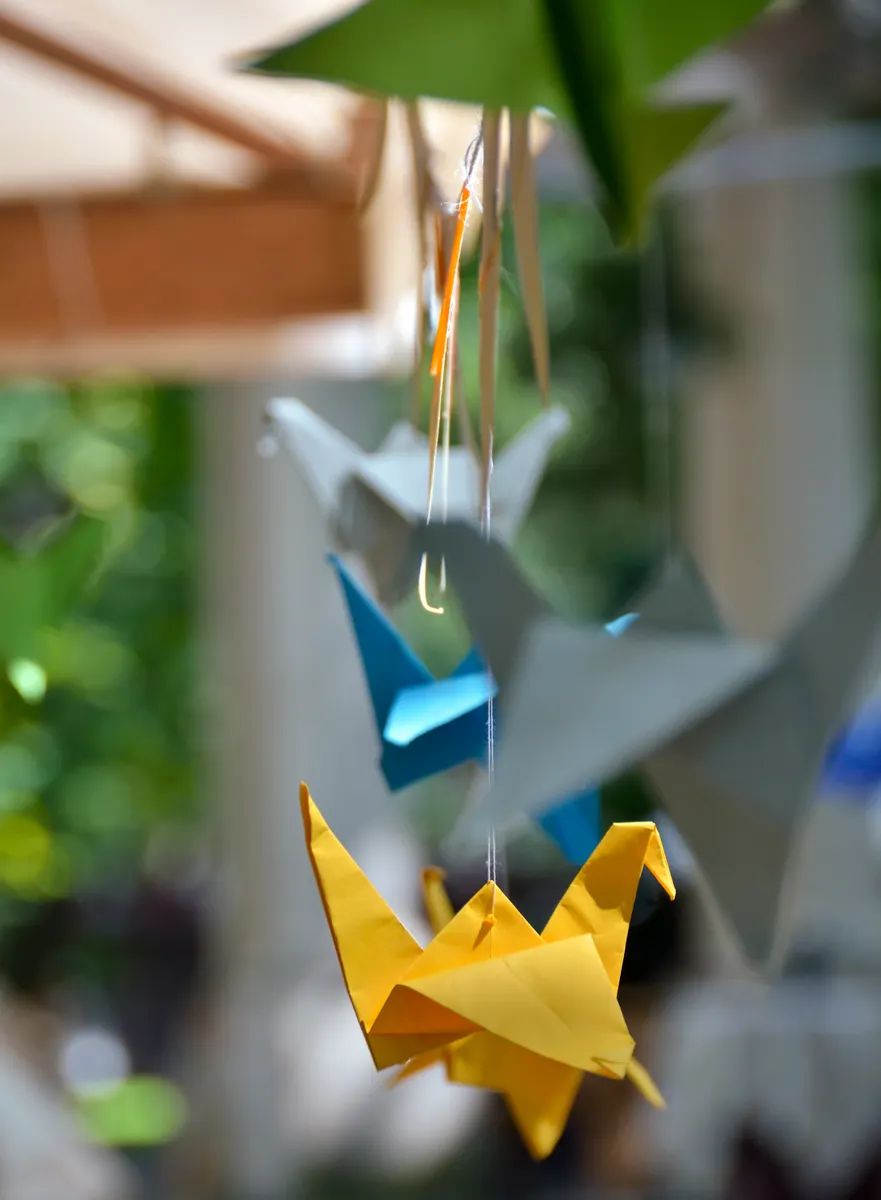
Photo Credit: Alexander Zvir
A folder I once spoke with at a craft swap described money origami as paper origami wearing a tighter outfit, since every fold still works the same way, it just has less room to move and less forgiveness for sloppy edges. That description has stayed with me, since my early money folds always looked noticeably rougher than my paper ones until I slowed down and matched my crease pressure to the bill's stiffer material.
Can You Practice Money Folds on Ordinary Paper First?
Practicing on ordinary paper absolutely works, and honestly, it's a smart way to build confidence before committing to an actual bill. Cutting a piece of standard paper down to match a dollar bill's dimensions, roughly 6.14 by 2.61 inches, lets you repeat tricky folds like the accordion as many times as needed without worrying about creasing a bill you'd rather keep looking clean.
The main difference you'll notice moving from practice paper to a real bill is stiffness, since currency paper holds a crease a bit more firmly and resists softening the way regular paper sometimes does after several folds. Once the basic motions feel comfortable on practice paper, that stiffer feel on an actual bill usually just means slightly firmer pressure is needed to get the same clean crease.
If you want a broader reference once you've got these basics down, it's worth keeping a dedicated list of folds handy. Money Origami Fold Reference organizes common money folds by difficulty and bill count, which makes it easier to plan your next project once single-bill basics feel comfortable.
Common Mistakes With Money Origami Basic Folds
A few habits tend to trip up folders working through these fundamentals for the first time.
- Using a heavily worn or crumpled bill. Existing creases and soft spots make new folds harder to control and can leave the finished model looking uneven.
- Rushing the accordion fold's spacing. Uneven sections here throw off nearly every design built on top of this fold later.
- Ignoring bill orientation before starting. Folding without checking which side should face out often means redoing the entire model once the mistake becomes obvious.
- Pressing creases too lightly. Money origami models tend to hold their shape better with firm, deliberate creases rather than soft, tentative ones.
Comparing Basic Money Folds and Basic Paper Folds
|
Factor |
Basic Paper Origami Folds |
Money Origami Basic Folds |
|
Starting shape |
Square sheet |
Narrow rectangle (dollar bill) |
|
Material stiffness |
Varies by paper type |
Fairly consistent, firm cotton-linen blend |
|
Orientation sensitivity |
Often symmetrical |
Requires checking face and seal side |
|
Common single-piece designs |
Cranes, boxes, flowers |
Rings, hearts, stars, bowties |
Frequently Asked Questions
What are the easiest money origami folds for beginners? Valley folds, mountain folds, and accordion folds are the easiest starting point, since nearly every money origami design builds on these three basic techniques.
Does money origami use the same basic folds as paper origami? Yes, money origami uses the same core folds as standard origami, just applied to a bill's narrower proportions and slightly stiffer cotton-linen material.
Which money folds work well with a single bill? Rings, hearts, simple stars, and bowtie shapes all work well as single-bill designs, built directly from valley, mountain, and accordion folds.
What bill orientation helps keep the finished model balanced? Checking whether the bill starts face up or face down, and which side should show once folded, keeps the finished model looking correct and prevents crooked results.
Can you practice money folds on ordinary paper first? Yes, cutting practice paper to a dollar bill's dimensions lets you repeat tricky folds freely before moving to an actual bill's stiffer material.
Final Thoughts
Money origami basic folds are a small, approachable set of skills that open up a surprising number of gift-worthy designs once they feel natural. Practice the valley, mountain, and accordion folds a few times on spare paper, pay attention to orientation, and that first folded bill will come together far more cleanly than you might expect.
If you're ready to explore the rest of what this hobby has to offer, Read the full origami guide for everything from paper choices to techniques across every skill level.



Leave a Reply