Grab three different cardstock types off a craft store shelf and hold them up to the light, and you'll notice they feel nothing alike, one bends like a greeting card, another snaps stiff like a coaster. Picking the wrong one has ruined more projects on my desk than I'd like to admit, which is exactly why understanding cardstock types matters before you buy a single sheet.
This guide is part of the Paper Crafts Materials & Tools Guide, and it covers exactly how weight, finish, and thickness affect your project, plus how to choose the right cardstock for card making, die cutting, stamping, and more. I've gone through more test sheets than I can count over the years, and the difference between a good match and a wrong one usually comes down to a few simple numbers on the package.
What Is the Difference Between Paper and Cardstock
This is the question most beginners ask first, and it's a fair one since the two can look similar at a glance. Paper is thin and lightweight, usually under 24 lb, the kind you'd load into a home printer. Cardstock is thicker and heavier, generally starting around 65 lb and going up from there, giving it more body, structure, and durability.
That extra thickness is what makes cardstock hold its shape for cards, layered art, and 3D projects, where regular paper would flop or tear. If you've ever tried folding a printer paper card and had it feel flimsy compared to a store-bought one, that difference in weight is the reason why.
Understanding Cardstock Weight: Pounds vs GSM
Cardstock weight gets confusing fast, mostly because two different measurement systems show up on packaging, pounds (lb) and grams per square meter (GSM). Both describe thickness, but they're calculated differently, which is why a "65 lb" sheet and a "176 GSM" sheet can actually be the exact same paper.
Here's a quick cardstock weight guide comparing common ranges:
|
Weight (lb) |
Approximate GSM |
Typical Feel |
Common Use |
|
65 lb |
176 GSM |
Light, flexible |
Basic card bases, layering |
|
80 lb |
216 GSM |
Medium, sturdy |
Card making, scrapbook pages |
|
100 lb |
270 GSM |
Heavy, rigid |
Die cutting, mixed media |
|
110 lb |
300 GSM |
Very heavy, stiff |
Invitations, tags, box making |
|
130 lb+ |
350 GSM+ |
Extremely rigid |
3D sculpture, heavy layering |
I always keep a mental note that GSM tends to be a more consistent measurement across brands, while lb weight can vary slightly depending on the manufacturer and paper type. When comparing two unfamiliar brands, checking the GSM number side by side is usually the more reliable comparison.
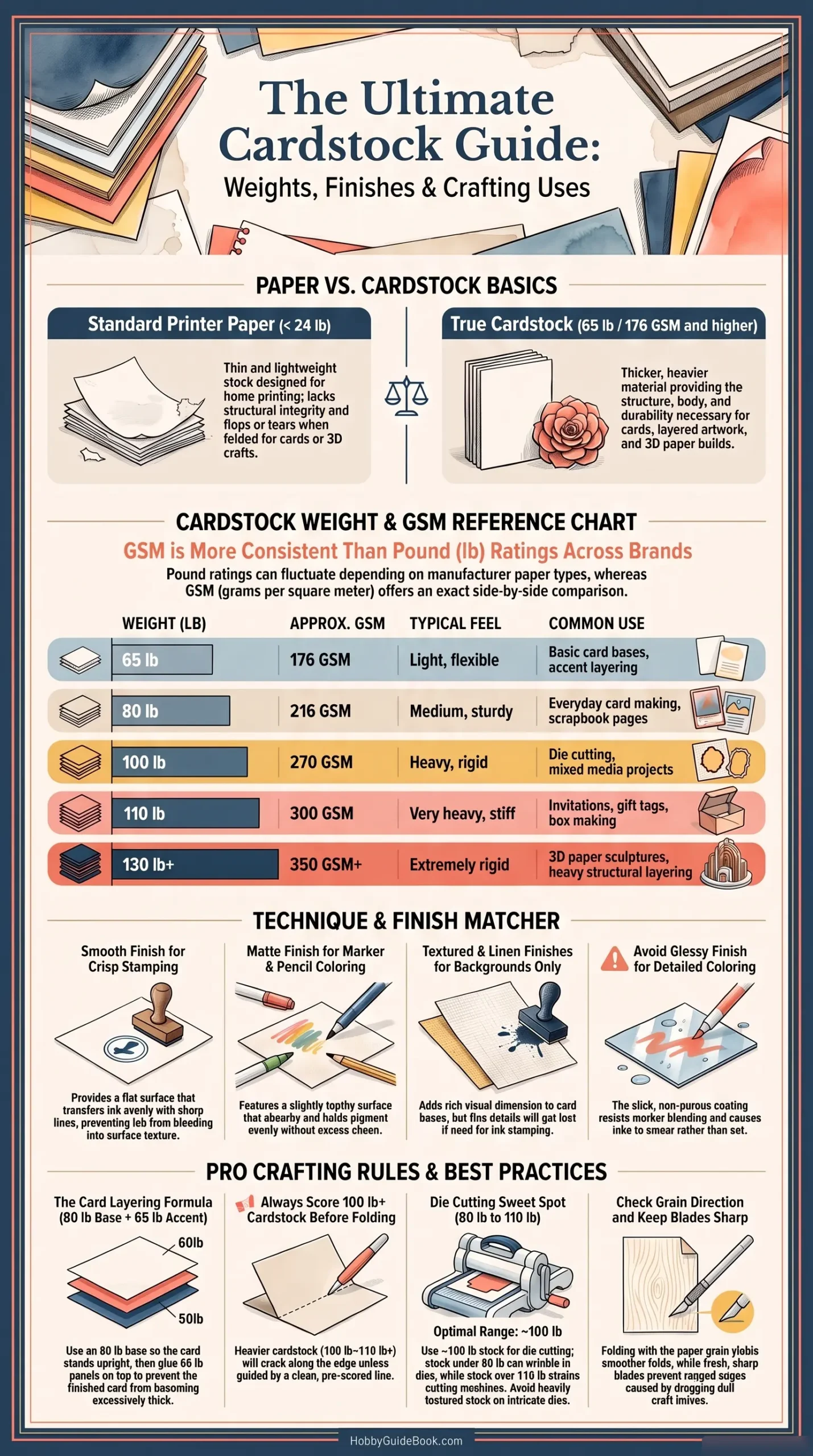
Photo Credit: Hobby Guidebook Editorial
For a printable version of this breakdown to keep near your worktable, the Cardstock Weight Chart covers even more weight ranges and their best matching projects in one place.
What GSM Is Best for Paper Crafts
There's no single perfect GSM for every project, but most paper crafters keep a few core weights on hand to cover the majority of their work.
- 176 to 216 GSM (65 to 80 lb) handles most everyday card making and layering needs.
- 270 to 300 GSM (100 to 110 lb) works best for die cutting, tags, and anything that needs to hold a crisp, clean edge.
- 350 GSM and up suits heavier structural work, like paper sculpture or box construction, where rigidity matters more than flexibility.
If you're only stocking a couple of weights to start, I'd suggest 80 lb for general use and 110 lb for anything structural. That combination covers a surprising amount of ground for a beginner's first few months of projects.
What Weight Cardstock Is Best for Card Making
Card making sits right in the middle of the weight range, and most experienced card makers settle on a similar answer here. 80 lb cardstock is the most commonly recommended weight for card bases, since it's sturdy enough to stand upright and survive mailing, but still light enough to fold cleanly along a scored line without cracking.
For layered elements glued on top of the base, like decorative panels or sentiment strips, a lighter 65 lb weight often works better, since it keeps the finished card from feeling overly thick or heavy in the hand. Mixing weights within a single card, a heavier base with lighter accent layers, is actually standard practice rather than a mistake.
What Is the Difference Between 80 lb and 110 lb Cardstock
This comparison comes up constantly, since both weights are popular but serve different purposes.
|
Feature |
80 lb Cardstock |
110 lb Cardstock |
|
Thickness |
Medium |
Heavy |
|
Folding |
Folds cleanly with a score line |
Can crack without proper scoring |
|
Best for |
Card bases, general crafting |
Die cutting, tags, invitations |
|
Mailing weight |
Standard, mail-friendly |
May need extra postage on large cards |
|
Feel |
Flexible, easy to handle |
Stiff, more structured |
80 lb is the more flexible, all-purpose choice, while 110 lb gives projects a firmer, more premium feel but requires a bit more care when folding. I always score 110 lb cardstock before folding it, without exception, since skipping that step is the fastest way to end up with a cracked, unprofessional looking edge.
How Do You Choose Cardstock for Die Cutting
Die cutting adds its own set of requirements on top of general weight and finish, since the cardstock needs to cut cleanly through a machine without jamming or tearing.
- Choose a medium weight, generally 80 to 110 lb, since lighter cardstock can shift or wrinkle inside the die, while overly heavy stock can strain the machine or leave rough edges.
- Check that the cardstock feeds evenly through your specific die cutting machine, since some brands run slightly thicker or thinner even at the same labeled weight.
- Test a scrap piece before committing to your final project piece, especially with intricate or detailed dies, to check for clean edges and full cutouts.
- Keep your die cutting blades and machine plates clean, since built up paper dust and debris can cause uneven cuts even with perfectly matched cardstock.
- Avoid textured or heavily embossed cardstock for detailed dies, since texture can interfere with how cleanly small, intricate shapes cut through.
For general purpose die cutting, 100 lb tends to be my go-to weight, since it holds detail well without being so stiff that it fights the machine.
Photo Credit: Kosart Studio
What Cardstock Finish Is Best for Stamping and Coloring
Finish matters just as much as weight once color enters the picture, since a smooth surface behaves very differently under ink or markers than a textured one.
- Smooth finish is the best choice for stamping, since it lets stamped images transfer cleanly with sharp, crisp lines and no ink bleed into texture.
- Matte finish works well for coloring with markers or colored pencils, since the slightly toothy surface holds pigment evenly without excess sheen.
- Glossy finish looks polished but tends to resist ink and marker blending, making it a poor match for detailed coloring work.
- Linen or textured finish adds visual interest for card bases and backgrounds, but isn't ideal for stamping since fine details can get lost in the texture.
For anyone starting out with stamping and coloring projects, a smooth, bright white cardstock in the 80 to 100 lb range is genuinely the best cardstock for paper crafts across the board. It handles ink cleanly, colors evenly, and works for nearly every basic project you'll try first.
"Good cardstock disappears behind your design, bad cardstock fights it the whole way through." That's something worth remembering any time a project feels harder than it should, since ink bleeding, cracked folds, or jammed die cuts are often a paper problem rather than a skill problem.
Specialty Cardstock and Paper Options
Beyond standard smooth and matte cardstock, a few specialty options come up often enough to be worth knowing about.
- Kraft cardstock offers a natural, slightly textured brown finish, popular for rustic or vintage style cards.
- Metallic or shimmer cardstock adds a subtle sheen, best used sparingly as an accent layer rather than a full card base.
- Vellum is a translucent paper often layered over cardstock for a soft, frosted effect.
- Embossed cardstock comes with a raised texture pattern already built in, useful for backgrounds without extra tooling.
If you're curious about these specialty options in more depth, Specialty Papers for Paper Crafts covers vellum, kraft, and metallic papers in far more detail, including how to work with each one without tearing or creasing them by accident.
Pro Tips and Common Mistakes to Avoid
A few patterns show up again and again with beginners choosing and working with cardstock for the first time.
- Choosing cardstock too light for the project. Thin cardstock used for a card base often feels flimsy and folds unevenly, especially without a proper score line.
- Skipping a scoring board before folding heavier stock. Anything 100 lb and up tends to crack at the fold without a clean, pre-scored line to guide it.
- Using glossy cardstock for coloring projects. The slick surface resists blending and often smears rather than absorbing color evenly.
- Ignoring grain direction. Cardstock folds more cleanly with the grain than against it, and testing a scrap corner first can save an otherwise good sheet.
- Cutting with a dull blade. A dull craft knife drags through cardstock instead of slicing cleanly, especially on heavier weights, leaving ragged edges that ruin an otherwise clean project. Keep blades sharp and swap them the moment cuts start feeling like they need extra pressure.
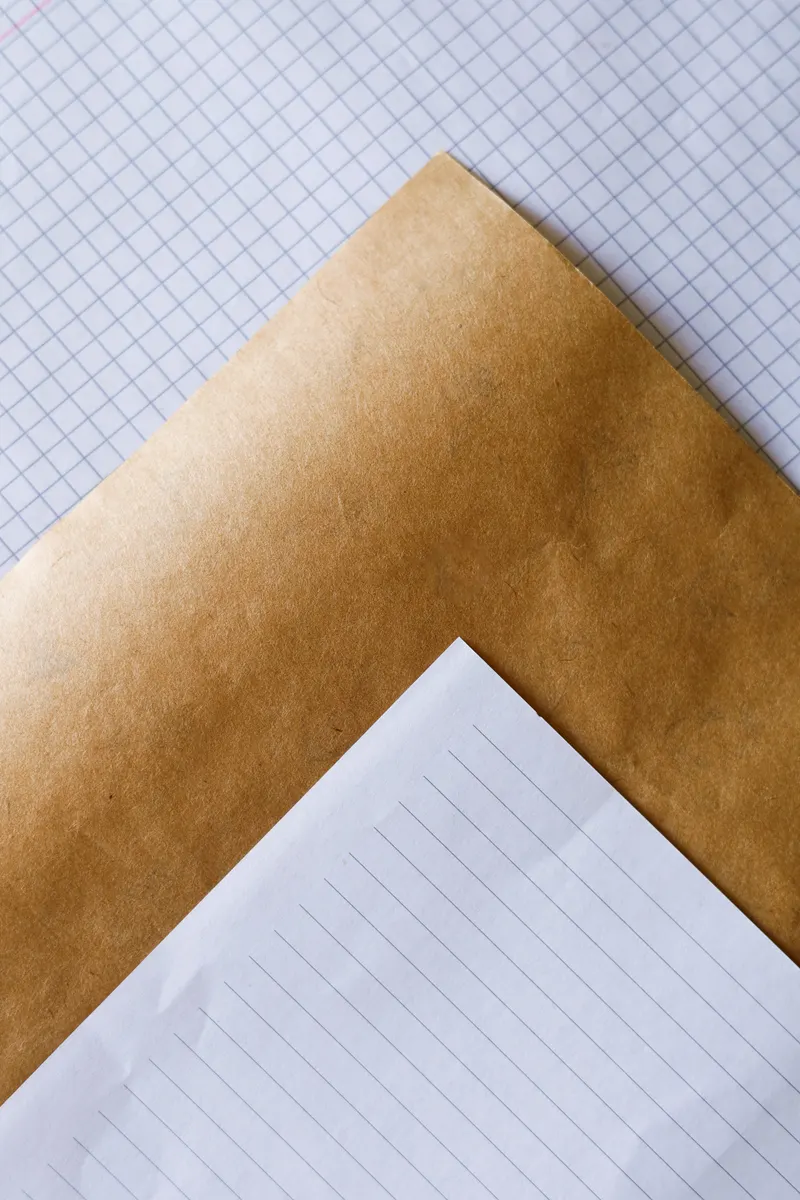
Photo Credit: Esra Erdem
Frequently Asked Questions
What is the difference between paper and cardstock? Paper is thin and lightweight, generally under 24 lb, while cardstock is thicker and heavier, typically starting around 65 lb. That added thickness gives cardstock more structure and durability for cards and layered projects.
What weight cardstock is best for card making? 80 lb cardstock is the most common choice for card bases, since it's sturdy enough to hold shape but still folds cleanly along a score line. Lighter 65 lb cardstock often works better for decorative accent layers on top.
What GSM is best for paper crafts? 176 to 216 GSM covers most everyday card making and layering needs, while 270 to 300 GSM suits die cutting and structural projects. Heavier crafters working on 3D sculpture often reach for 350 GSM or higher.
How do you choose cardstock for die cutting? A medium weight between 80 and 110 lb generally cuts cleanest through most die cutting machines without jamming or tearing. Testing a scrap piece first helps confirm the weight works well with your specific machine and dies.
What is the difference between 80 lb and 110 lb cardstock? 80 lb is more flexible and folds easily, making it ideal for general card making, while 110 lb is stiffer and better suited for die cutting, tags, and invitations. Heavier 110 lb stock needs proper scoring before folding to avoid cracking.
What cardstock finish is best for stamping and coloring? A smooth finish works best for stamping, since it produces crisp, clean image transfers without ink bleeding into texture. Matte finish suits coloring with markers or pencils, holding pigment evenly without excess shine.
Choosing the Right Cardstock for Your Next Project
Picking the right cardstock really comes down to matching weight and finish to what your project actually needs, a card base, a die cut shape, or a smooth surface for stamping. Once you understand how lb and GSM relate to each other, choosing between sheets on a store shelf gets a lot less confusing.
Start with 80 lb smooth cardstock for general projects, then build out your paper stash with heavier and specialty options as specific projects call for them.
Want to explore more paper craft skills? Read the full paper crafts guide for techniques across every paper craft style.



Leave a Reply